Since 1 September, councils in England have been able to issue fixed penalty notices of up to £5,000 for fly-tipping, up from the previous maximum of just £1,000.
Two months on, that figure has already hit the headlines, but for landowners the more pressing question is who pays to clear the waste. The government’s own statistics state that responsibility for clearing fly-tipping from private land rests with the landowner. The new fine goes to the council, not to you. Whether you get your clearance costs back depends on how the council deals with the fly-tipper, and on the evidence you can give them.
What changed in September: the Environmental Offences Regulations 2026
The Environmental Offences Regulations 2026 raised the maximum fixed penalty for fly-tipping fivefold. At the same time, the top fine for littering went up to £750.
Councils still decide how much to charge in each case. Cheshire East, for example, has set £500 for lower-level offences and £1,000 for more serious ones, both discounted if paid within 14 days, with up to £5,000 for the worst cases. Wiltshire Council has gone further, expecting most offences to attract between £2,500 and £5,000, with half off if paid within 21 days.
A fixed penalty is not an option for every offender. Government guidance for councils rules them out for waste businesses, repeat offenders, and anyone responsible for large-scale or hazardous dumping. Those cases will go to prosecution instead.
Is the £5,000 fine making a difference so far?
National figures will take a while to catch up: the most recent fly-tipping statistics for England, published in February 2026, cover 2024/25. That year, councils dealt with 1.26 million incidents, up 9% on the year before, and issued 69,000 fixed penalty notices. Most fly-tipping on private land is missing from those figures, because landowners clear it themselves and have no obligation or incentive to report it.
So far, the new fine has been met with some doubt. In September, the House of Lords Secondary Legislation Scrutiny Committee questioned whether £5,000 would deter organised waste crime, with Baroness Sheehan calling it “a drop in the ocean” for organised crime groups that charge to collect waste and then dump it to avoid disposal costs.
The committee also pointed out that a fixed penalty takes the place of a prosecution. For a landowner, that means once a fly-tipper pays the penalty, there is no conviction, and without a conviction there is no court order to repay your clearance costs.
Landowner groups welcomed the higher fine, on the condition that councils use it. The CLA’s Tim Bamford said “these changes must be enforced”, and the NFU points out that only one in 1,000 fly-tipping incidents is prosecuted by the police. With prosecutions that rare, most landowners will never see their clearance costs repaid.
Why is fly-tipping on private land the landowner’s responsibility?
Councils have a legal duty to clear fly-tipped waste from public land. That duty does not extend to private property: councils will not normally clear rubbish from private land free of charge, although they may investigate when you report it.
A council can also serve a notice under section 59 of the Environmental Protection Act 1990 requiring the occupier to remove dumped waste within at least 21 days, but only if it is satisfied that the occupier dumped the waste or knowingly caused or permitted it. A landowner who did neither can appeal to the magistrates’ court.
That protection doesn’t make the waste go away, however. Nobody else has to clear it, and rubbish left in place attracts more of the same. The longer waste stays on your land after you know about it, the harder it becomes to show you did not knowingly permit it, which is an offence under section 33.

What to do if someone fly-tips on your land
The NFU and the National Fly-Tipping Prevention Group set out the steps landowners should follow:
1. Keep your distance from anything that could be hazardous. Do not open bags or drums, and be wary of soil piles, which can hide contaminated material.
2. Record what you find, with photos, the date and time, and any vehicle details.
3. Report it to the council. Large, hazardous or organised dumping is a matter for the Environment Agency on 0800 80 70 60, and you can report anonymously to Crimestoppers on 0800 555 111.
4. Leave the waste where it is until it has been reported, and secure it so nobody can add to it.
5. Have it removed by a registered waste carrier and keep the paperwork. Under your duty of care, if a contractor you hire dumps the waste elsewhere, you could face an unlimited fine.
6. Keep a full record of what the clearance cost you.
If you see fly-tipping in progress, call 101 and do not approach the people involved. Note down as much as you can, such as vehicle registrations and descriptions of anyone you see.
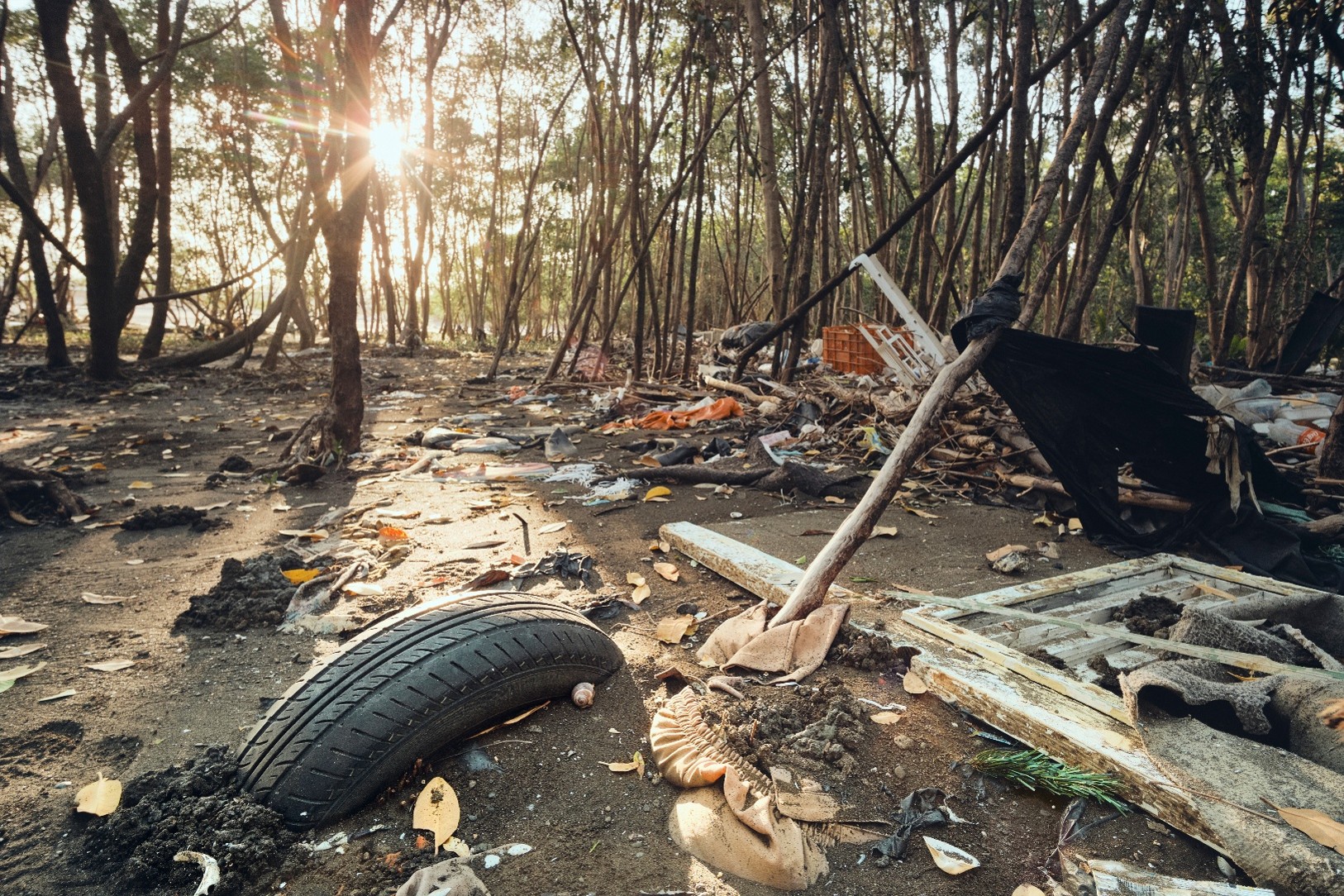
A few bags of rubbish are easy enough to have removed. A tipper-load of mixed waste, or everything left behind after an unauthorised encampment, is a larger and potentially dangerous job, especially if there are sharps or asbestos.
Our site clearance team is fully vetted to handle and dispose of waste safely. We assess the site and deal with hazards and litter in an efficient and thorough manner. Once the land is clear we can help you secure it so it is harder to target again. Call us on 0345 366 0000 for a free, no-commitment consultation.
Can you recover the cost of clearing fly-tipping?
Clearance costs can be recovered from a fly-tipper, but only through the courts. Under section 33B of the Environmental Protection Act, when someone is convicted of fly-tipping, the court can order them to compensate the owner or occupier of the land for removing the waste and dealing with its effects.
That relies on the culprit being identified and the case going to court, not ending with a fixed penalty. Your photos, timings, vehicle details and any CCTV footage give the council a case to pursue, and receipts from the company that removed the waste show the court what you have paid.
How to prevent fly-tipping on private land
Fly-tippers prefer sites they can get into quickly and leave unseen. Making access difficult is a deterrent, so consider restricting vehicle access with gates or barriers such as earth bunds, tree trunks and boulders, keeping gates locked when not in use, and improving lighting and sightlines so nobody can dump waste out of view. Make sure no barrier blocks a public right of way.
Signs and CCTV add a further deterrent, but cameras have to be used lawfully. Our guide to surveillance law in the UK covers this in more detail.
Many of the measures that keep out unauthorised encampments work against fly-tipping too. Our guides on protecting your land from trespassers and preventing travellers moving onto your land go into more detail.

Frequently asked questions
Is fly-tipping a criminal offence?
Depositing waste on land without a permit is an offence under section 33 of the Environmental Protection Act 1990. A conviction can bring an unlimited fine or up to five years in prison, and councils can issue fixed penalties for less serious cases.
Is fly-tipping a police matter?
Councils investigate most fly-tipping, and the Environment Agency handles large-scale, hazardous and organised dumping. The police are the right people to call when it is happening in front of you, so phone 101 or 999, and keep your distance.
What is the fine for a first fly-tipping offence?
Each council sets its own fines up to the national maximum. In Cheshire East, a lower-level offence costs £500, reduced to £300 if paid within 14 days, and the £5,000 maximum is kept for the most serious cases.
Getting fly-tipped waste cleared from your site
Able Investigations have worked with landowners and councils since 1993. Our site clean-up and clearance service deals with hazards and clears fly-tipped rubbish and abandoned belongings so the site is safe to use again. We also provide full documentation of the clearance, which supports a claim for your costs if the fly-tipper is prosecuted. Once the site is clear, we can advise on securing your site so it is harder to target next time.
Call us any time on 0345 366 0000, or use our enquiry form for a free, no-commitment consultation. You can also read more about our wider enforcement services.