.avif)
Trusted Since 1993

When a beneficiary, witness or party to proceedings can’t be found, the case stalls. Able Investigations are professional tracing agents working with solicitors and law firms across the UK. Using extensive professional databases, we can find missing people quickly, lawfully, and discreetly, and give your firm a verified current address or contact point to act on.









We trace witnesses, beneficiaries, relatives and other parties for law firms; private individuals must instruct us through a solicitor.
A full name and last known address are a starting point; dates of birth and other identifying details help avoid mismatches.
Sensitive cases may require discreet contact first, giving the person a choice about being found before their address can be shared.
You receive a written report of identified findings and supporting checks, with any ambiguity flagged for your legal case file.
Turnaround cannot be guaranteed. Timing depends on the starting information and case; flag court deadlines when you instruct us.

When someone drops off the radar, the case grinds to a halt. When you’re working to a court deadline or waiting to distribute an estate, unanswered letters and outdated contacts can disrupt the entire process.
We help solicitors regain traction. Our method, backed by three decades of experience, is designed to identify information you can act on, and we back it up with thorough legal checks and reporting. Law firms instruct us across civil litigation and private client work to trace witnesses, beneficiaries, family members and anyone else needed for legal contact. If a case is sensitive, we handle it with discretion and respect for the privacy of everyone involved.
In many missing person cases, the aim is to re-establish contact safely and with the consent of the person in question. When we find the person, we can make discreet contact on your behalf and give them the choice of whether (and how) to respond, without sharing unnecessary information or putting your firm or your client in a difficult position.
We believe that successful enforcement is measured by resolution over confrontation, so we aim to de-escalate the situation you’re facing, not intensify it. If that sounds right for you, give us a call. We’ll listen to your issue, assess your case, and advise on the most reasonable way forward. You can ask us any questions you have about us or the legal process, and learn more about our approach. All commitment-free.
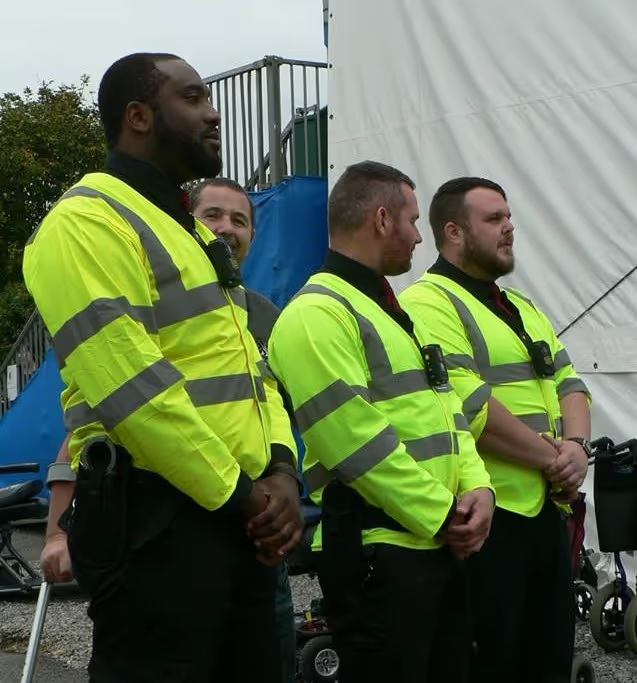
For over 30 years, solicitors have instructed our tracing agents to:
If your client has urgent welfare concerns, believes someone is at immediate risk, or the situation involves a high-risk disappearance, the police should always be the first point of contact. Specialist charities can also help in urgent cases, including Missing People and the British Red Cross.
Private individuals cannot instruct a missing person trace directly. If you need to find someone, ask your solicitor to instruct us on your behalf.
Most people can be traced, even when they have taken steps to make themselves difficult to find. Our professional tracers can access resources that aren’t available through public searches or a firm’s own enquiries, and have a rigorous process to confirm identities and locations.
Depending on the case, that might involve checking address-linked information, reviewing records and registers, and confirming links through lawful sources to paint a reliable picture. Once we have a result, we will cross-reference it to confirm accuracy and produce a report for your case file.
Even if your client can only give you a little to go on, we can normally do quite a lot, but we will always be clear with you about what is possible and realistic.
At the end of the trace, you receive a written report that sets out what has been identified and the checks and laws that support it. It is designed to be a valid source of evidence, whether you need to share it with counsel or the other side, or rely on it in court.
For estates, a documented trace also records the searches made when tracing missing beneficiaries. If a beneficiary still cannot be found, that record supports an application for a Benjamin order or for missing beneficiary insurance.
If there is anything that needs caution, such as similar details across more than one person, it will be flagged. A trace is only useful if it is honest about accuracy.
By its nature, we cannot guarantee turnaround for tracing; it depends on the quality of the information you start with and how long the person has been missing. More complex cases can take longer, but we will keep you updated if it comes to that. If you are working to a court deadline, tell us at the outset so we can say whether the timescale is realistic. Even if the person has gone abroad, we have international channels and partners to track them down.
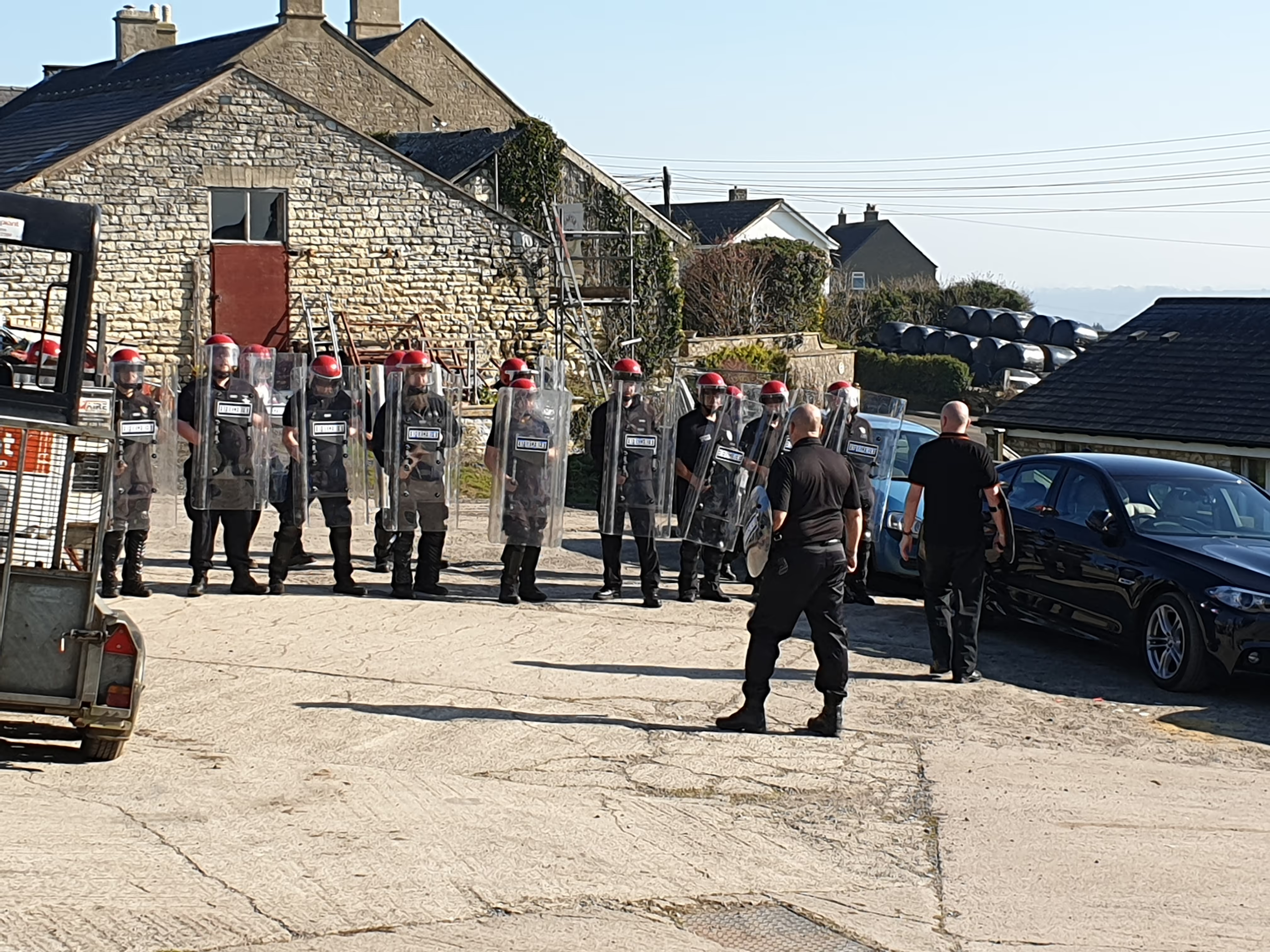














We believe that successful enforcement is measured by resolution over confrontation, so we aim to de-escalate the situation you’re facing, not intensify it. If that sounds right for you, give us a call. We’ll listen to your issue, assess your case, and advise on the most reasonable way forward. You can ask us any questions you have about us or the legal process, and learn more about our approach. All commitment-free.

.png)
.png)