A trespasser is defined as someone who enters a person’s land or property without the landowner’s permission. As a landowner, you have two main civil options in order to evict trespasser(s) which we will take you through.
Common law
However Private landowners can remove travellers using Common Law. Otherwise known as Halsburys Laws of England. It states that if a trespasser peaceably enters or is on land, the landowner may request him to leave. After this, the trespasser must be requested that they leave the land. There are no requirements that state a period of time. In many cases the landowner has already asked the trespassers to leave and they have failed to do so. If they do not leave, then the landowner has the right to use no more than reasonable force in order to make the trespasser(s) leave their land.
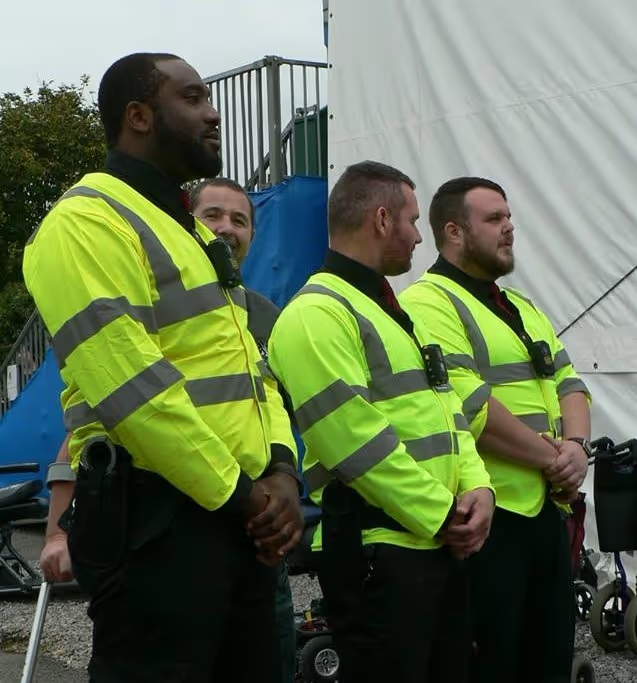
Before this step is carried out, we would always recommend getting a certificated enforcement officer (Bailiffs) involved, as otherwise the landowner could be liable for any injury caused or be vulnerable to any attack from a trespasser(s) plus an enforcement Officer will know & understand the law, as well as the psychology in the removal of problem trespassers.
Order for Possession
Another option for the landowner is to apply through the Court for an Order for possession. Once this has been awarded, the order can be transferred to the High Court so a Writ of Possession can be granted. As soon as the writ of possession has been received, the landowner can instruct High Court Enforcement Officers (such as Able Investigations) to remove the trespasser(s) again, using no more than reasonable force.
Obtaining an order for possession does take longer than common law and will be more costly and is seen as the final step as any trespasser(s) breaking this order are committing a criminal offence.
Can the police help?
In some circumstances yes, if there are over 6 caravans and a number of factors have been met, then the police can use Sec 61/2, but the factors have to be met, and a senior officer must sign it off. However, in most cases because trespass on your land is a civil offence and not a criminal one, they may ask them to make the trespasser(s) leave. but they cannot get directly involved, they are rather there as observers to see if any criminal offence takes place, such as a breach of the peace. Government legislation on evictions states that the exception to this is if 6 or more trespassers have, between them Sec 61 requirements are:
- caused damage to either the land or to property that sits on the land
- used threatening, abusive or insulting language or behaviour towards the occupier, family member or an employee or agent of his of any kind
- six or more vehicles on the land
If these requirements are met then the police may, if they are satisfied that the occupier or someone on their behalf has taken reasonable measures to ask the trespassers to leave, then the police can direct the trespasser(s) off the site and take with them any property and/or vehicles they have on the land .
The Able Enforcements’ team has years of experience of both assisting in Common Law evictions and also using a writ of possessions, from travellers to squatters and Protesters, all can eviction in the main using Common Law.
For help with process serving, call us on 0345 366 0000 or fill out our contact form.