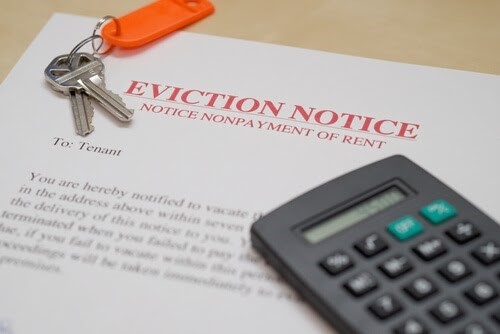
In England and Wales, most commercial tenancies are governed by formal agreements. However, there are situations where a business tenant occupies commercial premises without a written lease agreement—either due to informal arrangements, an expired lease that hasn’t been renewed, or because the parties never finalised terms in writing.
In such cases, commercial landlords may face challenges when seeking to regain possession of their property. But while the absence of a written lease can complicate matters, it does not remove a landlord’s legal rights.
This guide explains how a landlord can lawfully evict a commercial tenant without a lease, the types of tenancy that may exist, the processes involved, and what steps to take to ensure compliance with the Landlord and Tenant Act 1954 and other relevant legislation.

Can You Evict a Commercial Tenant Without a Lease?
Yes, a commercial tenant can be evicted without a written lease, but it depends on the circumstances. In most cases, the lack of a formal lease does not mean there is no tenancy. If rent has been paid and accepted, or if a landlord has allowed a tenant to occupy the premises, some form of tenancy agreement likely exists—even if informal.
What matters is identifying the type of tenancy in place and understanding whether the tenant benefits from security of tenure under the Tenant Act 1954. This legislation protects many commercial tenants by giving them the right to remain in the premises and apply for a new lease unless the landlord can demonstrate specific legal grounds for possession.
Oral Leases
An oral lease is formed when both parties agree to the key terms—such as rent and use of the property—without putting the agreement in writing. These types of agreements are legally valid but can create difficulties when disputes arise, as it may be unclear what was actually agreed.
In many cases, oral leases are treated as periodic tenancies, especially when rent is paid and accepted regularly (e.g. monthly or quarterly). Unless the landlord and tenant expressly excluded security of tenure before the arrangement began, the tenant will likely have protection under the Landlord and Tenant Act 1954.
Common issues with oral leases include:
- Unclear or disputed rent terms
- No written record of the lease term or duration
- Ambiguity around repair obligations or permitted use
- Lack of clarity on subletting or alterations
- Difficulty proving breach of agreement
To avoid complications, landlords should keep clear records of communications with the tenant, including emails, text messages, and notes of verbal discussions. These records can provide useful evidence if the landlord later needs to apply to the court for possession.
Landlords should also avoid accepting rent after discovering a breach of agreement, as doing so may result in the waiver of forfeiture—meaning the right to take back possession is lost.
Tenancy at Will
A tenancy at will arises where the tenant occupies the property with the landlord’s permission, without a defined term or formal agreement. These arrangements are typically short-term and are often used while a formal lease is being negotiated.
The key characteristic of a tenancy at will is that it can be terminated by either party at any time, and the tenant does not benefit from security of tenure. This gives the landlord flexibility, but also means the arrangement is less secure for both parties.
Although there is no legal requirement to give notice, it is usually considered reasonable to provide a short written notice period—typically 7 to 28 days—before ending the tenancy. This reduces the risk of disputes and allows the tenant to vacate the property in an orderly manner.
Periodic Tenancies
A periodic tenancy exists when the tenant remains in occupation and continues to pay rent after a fixed-term lease has expired, or when a tenancy is created informally and rent is paid on a regular basis. These tenancies can be weekly, monthly, or quarterly, depending on how rent is paid.
If the tenant has been in occupation for business purposes, and security of tenure was not excluded, they may have rights under the Tenant Act 1954. This means the tenant can apply for a new lease and cannot be evicted unless the landlord can prove one of the statutory grounds under Section 30 of the Act.
When ending a periodic tenancy, landlords must give notice that matches the rent period and ends on the correct date. For example, a monthly tenancy typically requires one month’s notice, while a quarterly tenancy may require six months. Failing to follow these rules can result in delays or an invalid notice.
Grounds for Eviction
A landlord cannot evict a commercial tenant simply because there is no written lease. There must be valid grounds, supported by evidence and, in some cases, approved by the court.
The most common grounds include:
1. Non-payment of Rent
If a tenant fails to pay rent, landlords can serve a Commercial Rent Arrears Recovery (CRAR) notice, which gives the tenant seven days to pay before enforcement action can begin. If arrears remain unpaid, the landlord may also pursue forfeiture—either by peaceable re-entry or by applying to court for a possession order.

2. Breach of Agreement
A landlord may take action if the tenant breaches the terms of the agreement, such as:
- Subletting or assigning the property without consent
- Using the premises for unauthorised purposes
- Failing to maintain or repair the property
In these situations, the landlord can serve a Section 146 notice, giving the tenant an opportunity to remedy the breach. If the tenant fails to comply, the landlord can proceed with legal action.
Where a written lease exists, a Jervis v Harris clause allows the landlord to carry out necessary repairs and recover the costs from the tenant. However, these clauses are rarely available in informal arrangements.
3. Expiry of Lease or Tenancy
If a fixed-term lease has expired and no renewal has taken place, the landlord may serve a Section 25 notice to bring the tenancy to an end. If the tenant submits a Section 26 request to renew the lease, the landlord can oppose it on one or more of the grounds listed in Section 30(1) of the Act.
These grounds include breaches of agreement, persistent delay in paying rent, or the landlord’s intention to use the premises themselves or redevelop the site.
Where a lease is not renewed due to redevelopment or owner occupation, the tenant may be entitled to compensation—typically equal to the rateable value of the property or double if they’ve occupied the premises for 14 years or more.
Peaceable Re-entry or Court Proceedings?
Landlords have two main options for regaining possession:
Peaceable Re-entry
If the premises are unoccupied, a landlord may be able to re-enter and change the locks without going to court. This is known as peaceable re-entry and is only lawful when no one is present and no force is used.
However, landlords must proceed with caution. If anyone is on the premises and objects, the re-entry could be considered a criminal offence. It is strongly advised to seek professional assistance and ensure the process is properly documented.
Applying to the Court
Where peaceful re-entry is not appropriate, the landlord must follow the formal legal route. This involves:
- Serving the relevant notice (e.g. Section 146, Section 25, or CRAR).
- Waiting the appropriate notice period.
- Issuing a claim for possession through the county court.
- Applying to transfer the order to the High Court for faster enforcement, if appropriate.
- Instructing enforcement agents to carry out the eviction once the possession order is granted.
This process typically takes between 10 to 16 weeks and can cost in the region of £2,500 to £3,500. However, it provides the landlord with legal certainty and protection against future claims.
Tenant Rights and Protections
Tenants occupying commercial property without a written lease may still have legal rights. If their tenancy falls under the Tenant Act 1954, they may be entitled to security of tenure, meaning they cannot be removed without following the correct legal process.
Even after a possession order is granted, the tenant may apply for relief from forfeiture within 28 days. This allows them to remain in the property if they pay arrears and meet certain conditions.
These rights underline the importance of seeking legal advice before taking any steps toward eviction.
What About Mixed-Use Properties?
Where a property is used for both residential and commercial purposes—such as a flat above a shop—different legal processes may apply.
The commercial parts of the premises fall under the Tenant Act 1954, while residential parts are likely to be covered by the Housing Act 1988. In these cases, landlords may need to serve both a Section 146 notice (for the commercial element) and a Section 8 notice (for the residential space).
It’s important to handle these cases with care to ensure all legal requirements are met.
Final Thoughts
Evicting a commercial tenant without a written lease is possible, but it requires a clear understanding of the legal framework and careful handling of each stage. Whether you’re dealing with an oral lease, a periodic tenancy, or a tenancy at will, it’s important to determine the correct type of tenancy, follow the appropriate notice procedures, and avoid actions that may amount to unlawful eviction.
If you need support, our experienced team at Able Investigations is here to help. We provide professional eviction services, High Court enforcement, and guidance on all aspects of commercial leases and possession proceedings.
Contact us today to find out how we can help you lawfully regain possession of your property