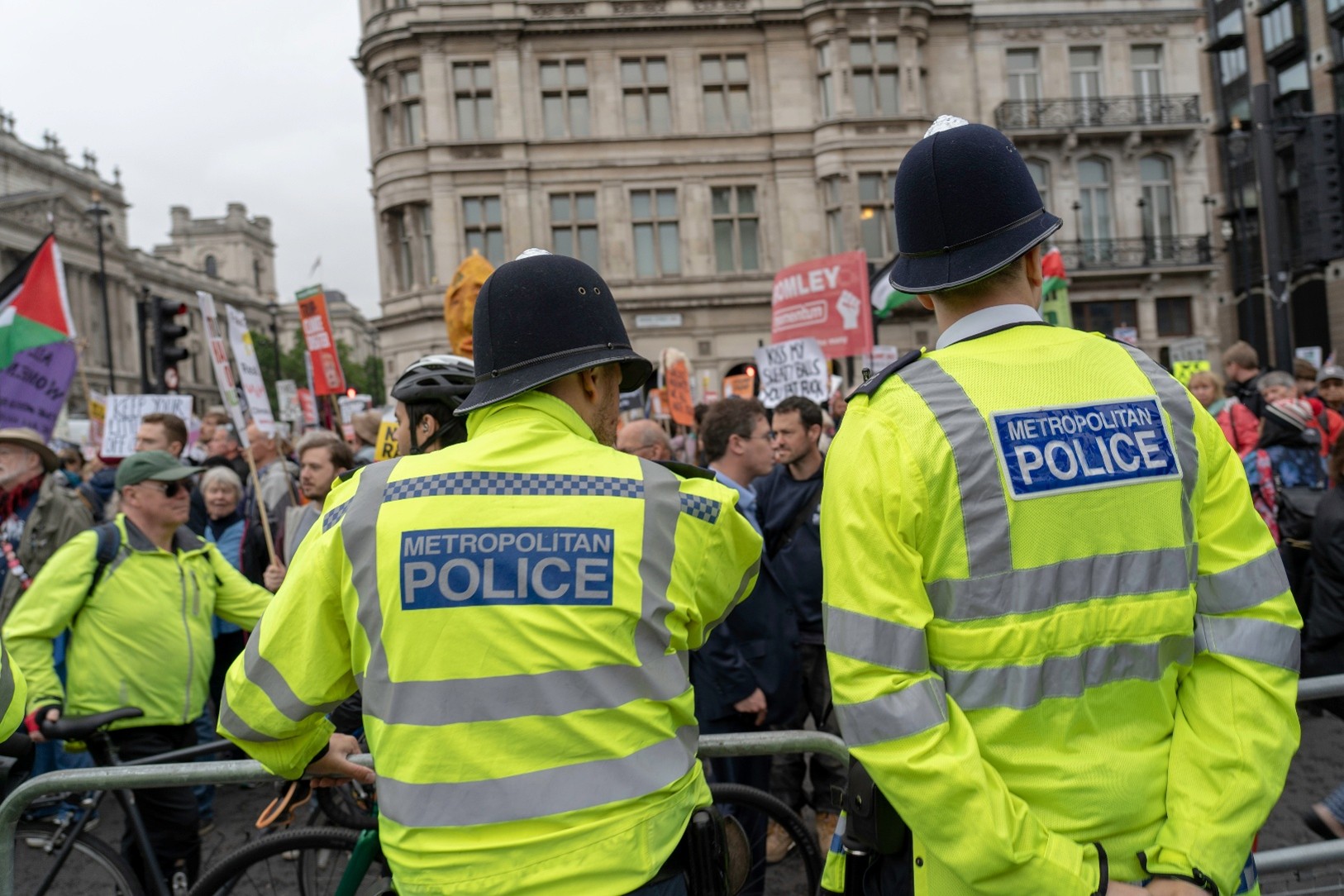
The protest sections of the Crime and Policing Act 2026 took effect on 29 June, and with party conference season coming up in autumn, those measures will be tested.
But if you own or manage a site, you have a more pressing question than what the police powers are: if protesters walk onto your land, what are you allowed to do about it?
Protest gives no one the right to be on your land. Someone who demonstrates on your site without permission is trespassing, and that gives you civil and sometimes criminal routes to having them removed. The new Act adds to what the police can do, but for a landowner, your options come from trespass law, court injunctions, and how well the site is protected, which we discuss below.
What the Crime and Policing Act 2026 changed in protest law
The Act received Royal Assent in April 2026, and its main protest measures came into force on 29 June. Three new offences stand out:
1. Covering your face at certain protests is now an offence, and an officer of inspector rank or above can declare a mask-free zone for up to 24 hours where they expect trouble.
2. Climbing on a war memorial is now an offence.
3. Carrying pyrotechnics such as flares to a protest is now an offence.
These add to powers already in place, including Serious Disruption Prevention Orders, which can bar named people from certain places and activities. The Act also changed the law on unauthorised encampments, putting the no-return period after an eviction back to three months, after the Police, Crime, Sentencing and Courts Act 2022 had raised it to twelve.
These are all public order offences, and the police enforce them when a protest tips into criminal behaviour, but typical cases will still unfold in established law like the Criminal Justice and Public Order Act 1994, and Part 55 of the CPR.
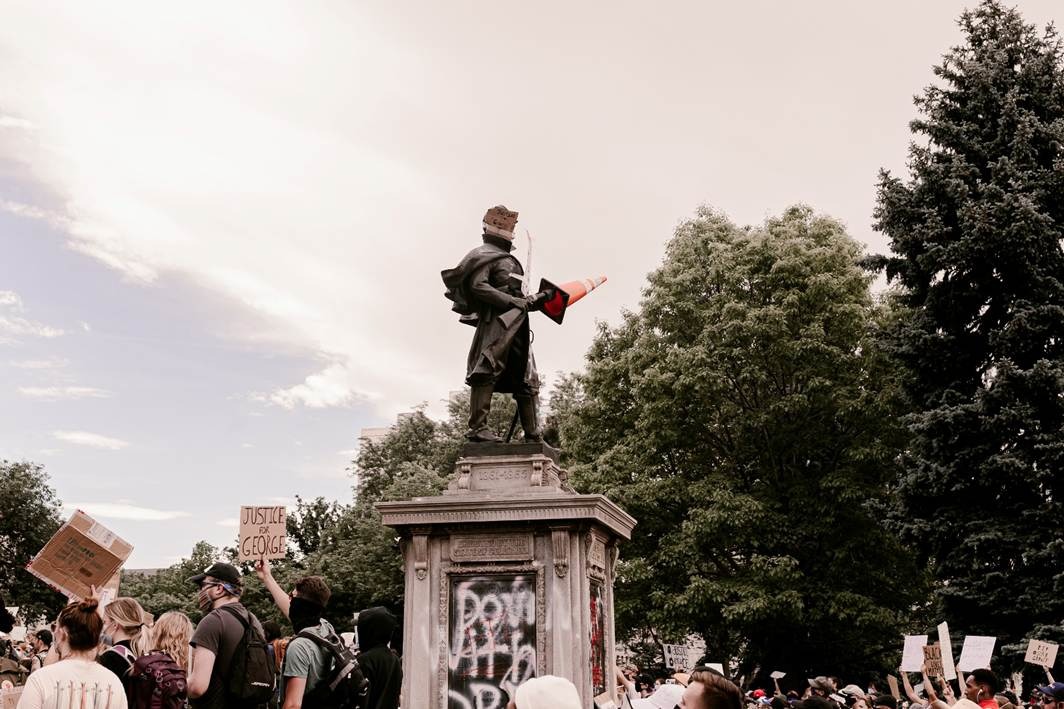
Protests and trespassing, and when it becomes a criminal offence
Once someone is on your land, the word protest carries little legal weight. If they have no permission to be there, they are trespassing, and trespass is usually a civil wrong, not a crime.
If the trespass becomes aggravated, that changes. Section 68 of the Criminal Justice and Public Order Act 1994 makes it a crime to trespass and then do something intended to intimidate, obstruct or disrupt people going about a lawful activity. This applies to both indoor and outdoor areas, and can lead to up to three months in prison.
If you are uncertain, always record what is happening and take advice early, instead of assuming the police will (or won’t) step in. Taking the wrong action risks leaving you liable.
We can offer a free discussion and clarification of your options at 0345 366 0000, 24/7, and can also arrange for highly trained, certificated enforcement agents to attend the property and deal with the trespasser(s), if that is the appropriate route.
Can I remove protesters from my private land?
The police will act on criminal behaviour, whether that is aggravated trespass, blocking a road or gate, halting work on a site, shutting down an event, or causing damage or threatening others.
A peaceful sit-in on private land is different, and forces will treat this as a civil dispute and leave it to you. So the responsibility, and the choice of how to act, falls to the landowner.
From there, the obvious first thing to do is to ask the group to leave, politely but firmly. If they refuse, certificated enforcement officers can then attend and remove trespassers under common law, without a court order, as long as the situation is straightforward.
Where the situation is more complex, for example if the group is dug in or likely to return, you may need a possession order under Part 55 of the Civil Procedure Rules, or a High Court writ of possession.
Whatever route you take, it is vital that you stay within the law, even if the trespassers do not. Using more force than is reasonable, or acting without the proper authority, can result in a claim against the landowner. An experienced enforcement agent is well-versed in the law and trained to resolve these situations decisively whilst keeping conflict to a minimum.
Types of court injunctions: standard, persons unknown, newcomer
For a site facing a repeated or expected protester threat, a court injunction is the most effective protection. It can stop named individuals entering or occupying a defined area. Breach is contempt of court, which can mean prison, a fine, or the seizure of assets. For unnamed individuals, a persons unknown injunction may be used.
Since the Wolverhampton City Council v London Gypsies and Travellers case in 2023, courts can grant what are known as newcomer injunctions. These bind people who are unknown when the order is made, and who have not yet done or threatened to do the act being prohibited. HS2, data centres, energy firms, developers, and event organisers all use newcomer injunctions to keep protesters away from vulnerable sites. They usually run for a fixed period, most commonly a year, and are reviewed as circumstances change.
An injunction has to go through the court, so setting this up is best done by a solicitor. Preparation is what makes it effective. With the groundwork already done, the land status confirmed and the evidence ready, an order can be sought quickly once a threat appears, instead of after damage is done.
How to secure your site to prevent trespassers and protesters
Preventing a problem is cheaper and easier than clearing one out, and landowners who prepare for trespass and opt for a preventative strategy save themselves money, time, and stress if and when a trespasser does emerge. This preparation can be both legal and physical.
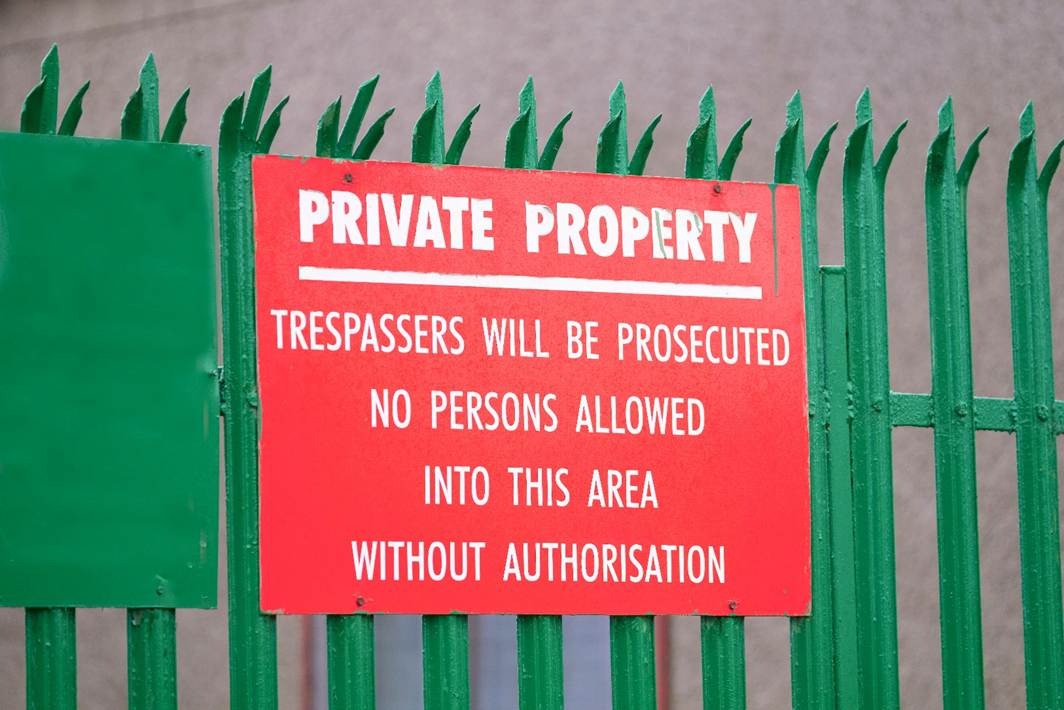
Firstly, know where your land boundaries run and who is responsible for the land. Put in fencing, gates and clear signage to deter opportunists. If suitable and the risk is justified, consider monitoring or on-site security. Construction sites and vacant land are the most exposed. Our guide on how to protect your land from trespassers covers this in more detail.
Legally, keep the route to removal ready and valid, whether that is a standing arrangement with an enforcement team, or an injunction.
Frequently asked questions
Is peaceful protest on private land a crime?
If protesters have no permission to be on your land, they are trespassing, which is a civil issue. It becomes criminal where it amounts to aggravated trespass, or involves other offences such as criminal damage or obstruction.
Can the police remove protesters from my land?
They can where a criminal offence is being committed, such as aggravated trespass or a threat to safety. Where the protest is peaceful and no offence is taking place, the police will treat removal as a civil issue for the landowner, which is where certificated enforcement officers come in.
How fast can protesters be removed?
A straightforward case can often be resolved by certificated enforcement officers under common law in in a matter of days or even hours. Cases that need a possession order or an injunction take longer, which is why we recommend having this set up and ready in advance.
When to bring in a specialist team
Some protests can be deterred with a solicitor and landowner action. Others need professional agents on hand to help. Able Investigations have worked with landowners, developers, councils and solicitors since 1993, and our Public Order Enforcement Teams are trained to the equivalent of Level 2 Police Support Unit standard. We cover England and Wales around the clock with court-certificated agents wearing body-worn cameras, to keep their actions accountable to the law.
Get in touch via our enquiry form or at 0345 366 0000 for a free, no-commitment consultation. We can advise on the most proportionate route, remove trespassers lawfully, support an injunction, or set up a point of contact as a preparedness measure.
Read more about our enforcement services and our traveller eviction work.