Parks, carparks and common areas open to the public are often prime locations for travellers and protestors to set up camp, which of course can be incredibly disruptive to local businesses and residents. If you are responsible for the management and maintenance of a public place and discover it has recently become occupied, then it’s likely you will need to evict them quickly.
What is the law surrounding evicting in public places?
Though many people refer to parks and carparks and other areas as public places, they are in fact land that is often owned by local councils or businesses, therefore occupants can be evicted under Common Law or through obtaining a court order.
The way in which unauthorised occupants are evicted depends not only on who and why they are occupying the land, but also who owns the land requiring repossession. Working out whether you can use Common Law or need to go through lengthier court proceedings can be difficult, especially if you do not fully understand the relevant legislation.
How should you evict those occupying public places?
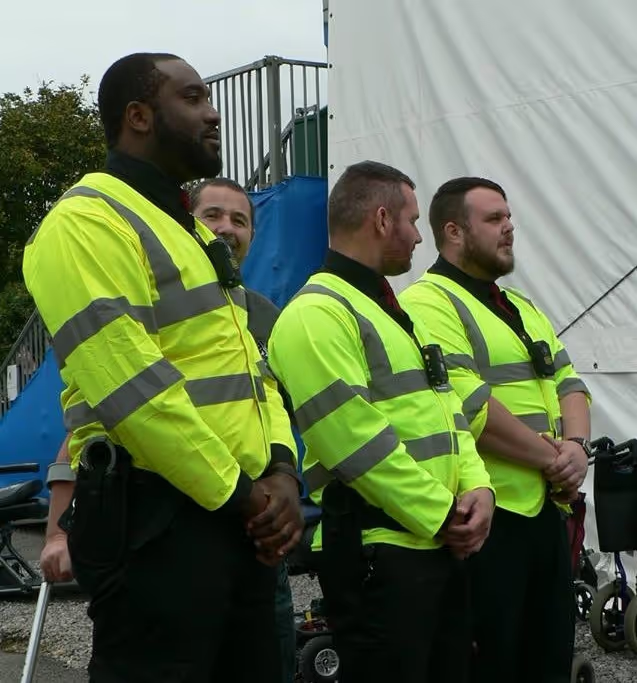
If you find you need to evict from a public place, then it is essential you use an enforcement agency to assist with the process. Attempting to evict without professional assistance can lead to complications and compromise safety of landowners and occupiers, especially in situations where occupants become threatening or violent.
An enforcement agency, like ours, not only has a full understanding of eviction law, but also has experience in dealing with varying and difficult land repossessions. This experience means we can quickly assess the situation and advise on the best course of action to take so your land is recovered as quickly as possible and able to be used by members of the public again.
If you are managing a public place that has recently become occupied and you require help with the eviction process, please get in touch with a member of our team by calling 0345 366 0000.
Read about one of our recent evictions where we removed travellers from a popular city park in Plymouth on our blog.