.avif)


If someone is on your land without permission, calling the police feels like the obvious first step. Whether they can do anything depends on one question: has a crime been committed?
In most cases, trespass is a civil wrong, not a criminal offence, and the police will leave it to the landowner. There are exceptions, and knowing them tells you when to call the police and when to take action yourself.
What counts as trespass?
Trespass means entering or staying on someone else's land or property without permission. That includes walking across private land, parking vehicles, putting up structures or camping. Someone who moves in and lives there is usually described as a squatter, and our guide to the difference between trespassing and squatting explains how the law treats each.

Is trespassing a criminal offence in the UK?
Not on its own. Simple trespass is a civil wrong, which means the landowner is responsible for removing the trespassers or claiming damages. It becomes a crime in these situations:
1. Aggravated trespass. Under section 68 of the Criminal Justice and Public Order Act 1994, it is an offence to trespass and then do something intended to intimidate, obstruct or disrupt people carrying out a lawful activity. It applies indoors and outdoors and carries up to three months in prison.
2. Residing on land with a vehicle. The Police, Crime, Sentencing and Courts Act 2022 added section 60C, which makes it an offence to live on land with a vehicle without consent, refuse to leave when asked, and cause or be likely to cause significant damage, disruption or distress. The penalty is up to three months in prison, a fine of up to £2,500, or both, and police can seize the vehicle.
3. Squatting in a residential building, which has been a crime since 2012. Our blog on whether squatters' rights still exist covers this.
4. Other offences committed while on the land, such as criminal damage, theft or threatening behaviour.
What powers do the police have to remove trespassers?
Section 61 directions
Section 61 of the 1994 Act lets a senior officer direct trespassers to leave land where two or more people are there intending to live on it, the occupier has taken reasonable steps to ask them to leave, and either they have caused damage, disruption or distress or they have six or more vehicles with them. Failing to leave as soon as reasonably practicable, or returning within three months, is an offence. These directions are what people usually mean by a Section 61 notice.
Aggravated trespass and vehicle powers
Where officers believe aggravated trespass is taking place, they can direct the people involved to leave under section 69. Under the 2022 Act, they can also seize vehicles from people committing the section 60C offence.
These powers are discretionary. Police decide whether to use them based on the circumstances, and a quiet encampment or a peaceful group on private land may be treated as a civil issue. Our blog on who moves encampments on, and when sets out how police, councils and enforcement agents split the work.

If the police can't help, how do you remove trespassers?
Start by asking the trespassers to leave, politely and in writing if you can, and keep a record of what happens. If they refuse, you have these lawful options:
5. Common law removal. Certificated enforcement agents can remove trespassers from land under common law, without a court order, where the situation is straightforward. Our guide to using common law for evictions explains how it works.
6. A possession order. Where the group is entrenched or likely to return, you can claim possession under Part 55 of the Civil Procedure Rules, and enforce it through county court bailiffs or a High Court writ of possession.
7. An interim possession order. This only applies to buildings, and only if you apply within 28 days of finding the occupiers. Once served, they must leave within 24 hours.
8. An injunction, for sites facing repeated trespass or protest. Our blog on removing protesters from your land covers this route.
Whichever route you take, do not use more force than is reasonable. A landowner who acts outside the law can face a claim from the trespassers themselves.
How to stop trespassers returning
Fencing, locked gates, clear signage and, where the risk justifies it, cameras or on-site security all make land a harder target. Know where your boundaries run and act quickly when trespassers first appear. Our tips to protect your land from trespassers go into more detail.
Frequently asked questions
Is trespassing illegal in the UK?
Trespass is unlawful, but it is usually a civil wrong, not a crime. It only becomes a criminal offence in specific cases, such as aggravated trespass or residing on land with a vehicle and causing significant damage, disruption or distress.
What is a Section 61 notice?
It is a direction from the police for trespassers to leave land they intend to live on, where the legal conditions are met. Ignoring it, or coming back within three months, is a criminal offence.
Can I remove trespassers myself?
You can ask them to leave, and the law allows reasonable force in limited cases, but getting it wrong can leave you open to a claim. Certificated enforcement agents know where the legal lines are and can remove trespassers for you.

Remove trespassers quickly and lawfully
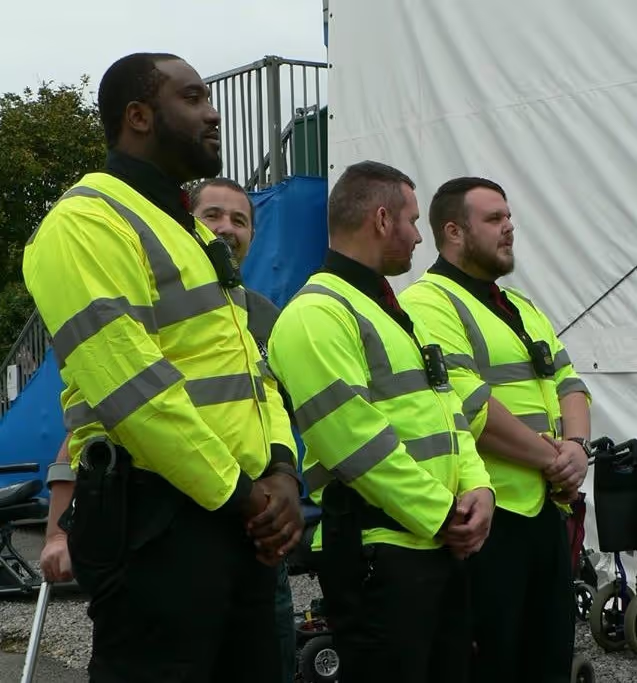
Able Investigations have worked with landowners, developers, councils and solicitors since 1993. Our certificated enforcement agents cover England and Wales around the clock, wear body-worn cameras, and will advise on the most proportionate route before anyone attends your site.
Call us 24/7 on 0345 366 0000 or use our enquiry form for a free, no-commitment consultation. You can also read more about our enforcement services and traveller eviction work.