
A term that has appeared with increasing regularity in local authority reporting this month is Negotiated Stopping. York City Council backed a formal Negotiated Stopping protocol on 7 July 2026, and Plymouth City Council designated a playing field as a temporary Negotiated Stopping site the same week.
The term isn’t new, but the pace at which councils are adopting or formalising the approach is compounding as travellers have fewer valid places to set up camp. For council officers dealing with encampments, Negotiated Stopping is an active policy choice with practical implications for how encampments are managed.
If you are a private landowner who has seen the coverage and wondered what it means for you, your position has not changed, but understanding how councils are now approaching encampments on their land is directly relevant to what may end up on yours.
What is Negotiated Stopping?
Rather than immediately serving a Direction to Leave notice and pursuing a court order, a council using Negotiated Stopping volunteers a piece of its own land where an incoming traveller group can be directed to stay for a short, agreed period. The agreement sets out how long the group can remain (typically up to two weeks), how many caravans are permitted, and what facilities will be provided (usually portable toilets and waste disposal).
Negotiated Stopping may not sound beneficial, but it is appropriate in cases where travellers are passing through, are not causing significant harm, and are willing to engage with support services. It was first adopted by Leeds City Council but now spans across the UK. The national Sanctuary Stopping organisation works with churches and other landowners to identify suitable sites for this purpose.
It is a nuanced approach. Councils that employ it argue the approach is less costly than repeated court proceedings and more likely to result in a clean departure with less disruption to other public spaces. Critics, including many local residents, point to the burden placed on communities near the designated sites.

What Negotiated Stopping Means for Councils
When it comes to how local authority officers manage unauthorised encampments on council land, Negotiated Stopping is just one tool in the toolkit, but it changes how and when other tools are used.
Under the current framework, councils can use Section 77 of the Criminal Justice and Public Order Act 1994 to issue a Direction to Leave, followed by a Magistrates’ Court order if the group refuses to move. Civil Procedure Rule 55 and common law routes are also available depending on the circumstances.
Negotiated Stopping makes it so that the first response to an encampment is to direct the group to a designated temporary site, rather than to issue an immediate notice. This requires councils to have identified suitable land in advance, and to have a clear protocol for when the approach does and doesn’t apply. It works alongside Section 77 and the CPR, but doesn’t replace them.
There are also practical considerations that come with managing any encampment, even a tolerated one: welfare assessments must be completed, the terms of any agreement need to be enforceable, and the council still needs to have a plan of enforcement if the group overstays or the situation deteriorates. Getting those processes right will save headaches, money, and face later, and having an experienced enforcement partner on hand to support that stage makes a material difference to how quickly things are resolved.
Able Investigations work with many local authorities across England and Wales on traveller encampment management. We support councils through every stage, from welfare assessments and on-site management to Section 77 notices and representation at the Magistrates’ Court, at substantially lower cost than civil proceedings. If your council needs a reliable and experienced enforcement partner, get in touch for a free consultation.
What Negotiated Stopping Means for Private Landowners
Negotiated Stopping applies to council-owned land, so a local authority cannot designate your private land as a Negotiated Stopping site or require you to allow travellers to remain on it under any form of agreement, without your consent. However, if they direct a group to a Negotiated Stopping point near your land, there is a possibility that they move onto your land once the agreed period ends. Robust physical security before that happens is the most effective response. For more information on how to protect your land against intruders, read our blog on the matter.
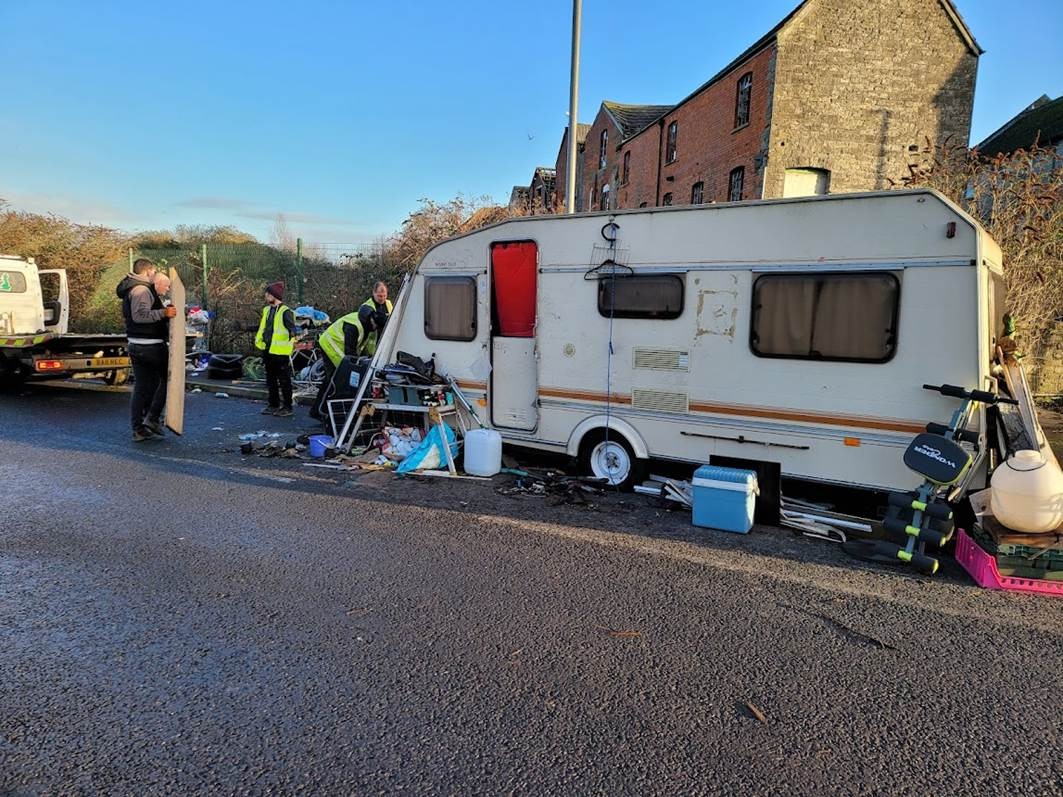
When an unauthorised encampment appears on private land, the responsibility for seeking removal is still solely with the landowner. Common law is usually the fastest route. Certificated enforcement officers can attend the site and require the group to leave without a court order, but where the situation is more complex (large groups, historic resistance or anti-social behaviour, a high risk of return), a possession order under CPR 55 or a High Court Writ of Possession may be the better approach.
Why This Is Happening Now
Unauthorised traveller encampments have been rising steadily. The government's January 2026 caravan count recorded 29,402 traveller caravans in England, up 36% since 2015, with caravans on unauthorised land up 11% on the previous year, even considering the winter season. Summer accelerates this: travelling routes to and from Appleby Horse Fair in June, warmer weather, and school holidays push encampment numbers up noticeably between June and August.
Councils are under significant pressure to reduce the cost and frequency of legal proceedings. The shortage of authorised traveller sites has been described by Friends, Families and Travellers as leaving lawful stopping places "virtually non-existent." That means that many groups arriving on council land have no lawful alternative stopping place. For an increasing number of councils, a managed short stay is a better outcome than the cycle of serve, court, evict, repeat.
On the legal front, Crime and Policing Act 2026, which received Royal Assent in April, has restored the no-return period following eviction from an unauthorised encampment to three months, reverting a 12-month ban that the High Court declared incompatible with human rights law. That change modestly reduces the deterrent effect of police removal, reinforcing the case for a clear civil enforcement strategy, whether or not Negotiated Stopping forms part of it.
Get a Clear Course of Action
Whether you are a council officer looking for a more effective way to manage encampments across your sites, or a private landowner dealing with a situation on your land, the process and the right support both depend on getting the details, both legal and literal, right from the start.
Able Investigations are a specialist team who have been working with local authorities, developers, and private landowners on traveller matters since 1993. Our certificated enforcement officers carry body-worn cameras, are highly trained in conflict management, and are experienced in handling encampments of every scale, including large or aggressive groups. We can advise on the most proportionate and lawful route forward, whether that involves Section 77 enforcement for councils, common law removal, or securing a site against future access.
Call us on 0345 366 0000 or use our online enquiry form for a free, no-commitment consultation.