When unauthorised individuals occupy your commercial premises, it can quickly turn from an inconvenience to a legal and financial liability.
As a commercial property owner, knowing how to act quickly and follow the correct legal processes is vital to regain control of your premises and limit potential damage. In this guide, we’ll explain how to remove squatters from commercial buildings and what steps you need to take to protect your rights.

Understanding Squatting in Commercial Properties
Unlike squatting in residential properties, which can be treated as a criminal offence under section 144 of the Legal Aid, Sentencing and Punishment of Offenders Act 2012, squatting in commercial properties is often treated as a civil matter. This means police have limited powers to intervene, and the responsibility for removal typically falls on the property owner through civil court procedures.
While squatting in residential properties can result in arrest and prosecution, those occupying commercial buildings must be dealt with through legal action, unless they're committing a criminal offence such as causing damage, stealing utilities, or breaking in.
Step 1: Act Quickly and Assess the Situation
Time is critical. The longer squatters remain in your commercial premises, the harder it may be to remove them. Start by confirming that the individuals are indeed squatters—not tenants with a lease or license, or persons with any prior legal right to be there.
Key early steps include:
If an Officer can access the building without breaking in or meeting anyone at the door, then once he is in peacefully, he has control of the building. Squatters can then be evicted without the need of a Court Order.
Section 6 of the protection of Eviction does not apply providing entry can be made peacefully. Section 6 also doesn’t apply if a Squatter is in a car part behind locked gates, it is the building that is protected, not the land.
Therefore, the officer can access through the gates. One does have to be mindful of the Criminal Damage Act if the squatters have placed their own padlock on the gate, however this can be circumnavigated if you leave the padlock in place and cut the gate hinges with the client’s permission.
If the situation is not criminal, it will need to be handled through the county court.
Step 2: Apply for an Interim Possession Order (IPO)
To regain your property swiftly, commercial landlords can apply for an Interim Possession Order (IPO) through the county court. However, we strongly advise not to go down this route. Whilst you will get the IPO, which then makes it a criminal matter for the squatters to remain in the building, it is highly unlikely that the police will be able to assist you with Enforcement.
They will again revert back to “it’s a Civil Matter” or “we do not have the resources.”
It is much better to apply directly for a Possession Order.
How an IPO works:
Using an IPO is a strong and time-sensitive method for commercial property owners seeking fast resolution.
Step 3: Claim for Possession

Whether or not you choose to apply for an IPO, you must submit a claim for possession at the county court. This legal document formally requests the return of your property.
If you do not use the IPO route, your claim will follow the standard possession process. This typically leads to a hearing at a later date, giving squatters the opportunity to respond. If successful, you will obtain a possession order, which authorises court-appointed bailiffs to evict the squatters.
In urgent or extreme cases, such as those involving damage, risk to life, or obstruction of business, you may be eligible for a summary possession order, which can expedite the process.
What Happens After You Obtain a Possession Order?
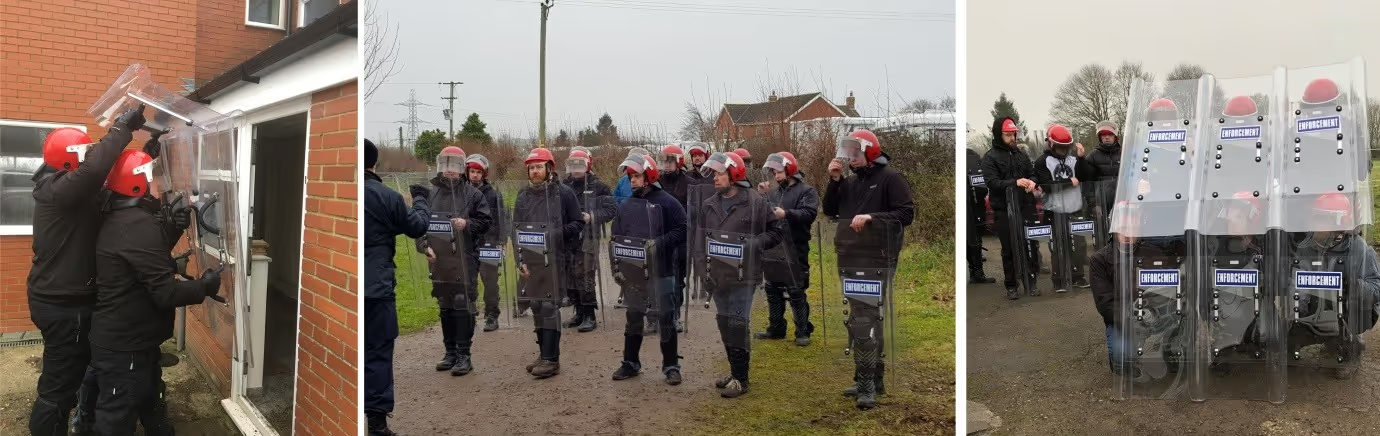
Once you’ve been granted a possession order, you can instruct court bailiffs or High Court Enforcement Officers to remove the squatters. They will attend the premises and formally evict any remaining occupants.
Be aware that enforcement can still take time, especially if the squatters resist or appeal. Acting early helps reduce these risks.
How to Prevent Squatters in Future
Prevention is always better than cure. After repossession, it’s important to take measures to prevent squatters from returning. Here are a few key strategies:
Commercial Property Owners: Know Your Rights
It’s easy to feel helpless when dealing with squatters, but commercial property owners have strong legal avenues available. Whether using an interim possession order (IPO) or pursuing a claim for possession, the courts do offer protection—if you take swift and appropriate action.
Here’s a quick recap of key steps:
Action Description Act quickly Begin legal proceedings within 28 days to maximise your options. Apply for an IPO Requires squatters to leave within 48 hours once served. Claim for possession Essential for court-led eviction, even if not using IPO. Use enforcement officers To carry out eviction post-judgement. Secure the premises Prevent future squatting or damage.
Although commercial landlords have various legal options for evicting squatters, it’s just as important to understand what not to do—so everything is handled correctly from the start.
Read our blog, ‘5 Things Property Owners Should Never Try When Dealing with Squatters’, before you begin the process.
Final Thoughts: Seek Legal Advice
Every squatter situation is different. The process can become complex if there are vulnerable individuals involved or if multiple legal issues intersect. It’s essential to seek legal advice from professionals experienced in property and possession law. They’ll help guide you through the court system, documentation, and enforcement—ensuring you stay on the right side of the law while protecting your property.
Squatting may be a civil matter in many commercial cases, but that doesn’t mean you’re powerless. With the right steps, and by moving promptly, you can regain control of your commercial property and take steps to avoid future disruption.
Need some expert assistance? Able Investigations are here to help! Get in touch to our team today.