A squatter is an occupant of a building or land that is not being used, and who has no legal claim to the property and no prior permission to use the property.
It is often the case that squatters claim a right to occupy a building or land based on Section 6 of the Criminal Law Act 1977, which was originally introduced as a way to protect the occupants of a property, particularly in relation to tenants and landlords. However, this does not provide squatters with the right to reside on residential premises that they do not own.
Squatters can prove to be a serious problem for owners of commercial and residential buildings alike. If you’re experiencing problems with squatters on your property, then it’s important to know where you stand legally and what is within your power to remove the squatters from your premises.

The rights of squatters
Prior to the Legal Aid, Sentencing and Punishment of Offenders Act 2012 (LASPO), squatting was considered to be a civil issue that required property owners to undergo civil court proceedings in order to evict squatters from their property.
Post-LAPSO, which came into effect on the 1st of September 2012, squatting is now a criminal matter in residential cases under section 144 of the act. This means that on the provision of proof that an individual has intended to reside in an unoccupied property without prior consent, and has trespassed onto the property, it’s possible for the police to arrest them.
This change in law only applies to residential buildings. It’s not illegal for a squatter to occupy a non-residential property, but it is illegal for a squatter to cause damage to the property in any way. Under the Criminal Damage Act 1971, it’s a crime to damage or destroy property that belongs to another, which can include damage caused by trespassing.
While it’s a crime to reside in a residential property without consent, and to damage a non-residential property, squatters can claim ownership of an unused building or land, if the property has been resided in by squatters for 10 years, or 12 years for unregistered properties.
How to evict squatters without having them arrested
Despite having legal grounds to have squatters on residential properties arrested, there are multiple ways to evict squatters without having to go down that route. One of the easiest of these methods, that doesn’t involve lengthy court proceedings, is to evict squatters under Common Law.
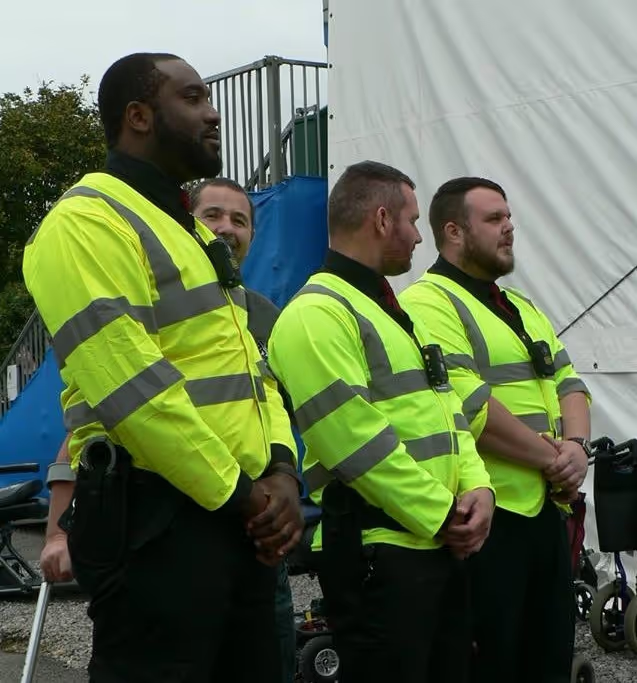
Under Common Law, it’s often possible to use an enforcement agency to legally remove the squatters, under the conditions that no unreasonable force is used and that the squatters don’t accost the agency. This method of eviction is much more peaceful than arrest and can be a lot faster than going through the courts.
Possession
Alternatively, you could apply through court for an order for possession. This will be a longer process however you can transfer this up to the High Court for a Writ of Possession. Once this has been obtained, High Court Enforcement Officers can legally remove the squatters and they will be committing a criminal offence if they do not vacate the premises.
Able Investigations can provide help and advice on all aspects of removing squatters and, as a highly experienced enforcement agency, assist you with formulating an ongoing solution to preventing squatters from inhabiting your property. Please get in touch with us today if you have any concerns over squatters residing on your property. You can call us on 0345 366 0000 or use our contact form and we will get back to you.